Maximizing User Experience: Designing for Accessibility, Engagement, and Satisfaction

Maximizing User Experience: Designing for Accessibility, Engagement, and Satisfaction

If you’re a website designer or developer, maximizing user experience is one of the most important factors in creating a successful website. That’s why it’s critical to understand how to design for accessibility, engagement, and satisfaction. With the right strategy, you can create webpages and applications that keep people coming back for more.

Here are some significant objectives of a user friendly website:

Accessibility: One of the main objectives of any user experience is accessibility. This means making your website or app navigable and easy to read. Start by using a responsive design so the layout automatically adapts to different screen sizes. Additionally, use clear navigation that’s simple and straightforward. This will help users find the information they need quickly and easily.

Engagement: It’s also important to consider engagement. Large blocks of text or media-heavy designs can quickly alienate website visitors. Instead, break up long text with images or graphics. You can also use interactive elements like sliders, maps, and user profiles to encourage exploration and engagement.

Positive experience: Lastly, satisfaction is key to creating a successful site. Website visitors should come away with a positive experience. Clear calls-to-action and engaging content that actually speaks to the user is essential. Additionally, make sure you stay up-to-date with web technologies to keep the website or app modern and appealing.

By focusing on these three key goals—accessibility, engagement, and satisfaction—you can ensure users have an enjoyable experience on your website or app. Doing so will help turn one-time visitors into repeat customers and keep them coming back.

Exploring the Latest Innovations in Web Accessibility Technology

Exploring the Latest Innovations in Web Accessibility Technology

Web accessibility technology has made tremendous advancements over the past few years. This technology helps make websites more accessible to individuals with disabilities, allowing them to access and interact with websites like everyone else. With the advancements in web accessibility technology, website owners can provide a more inclusive web experience for all types of users.

Web accessibility technology consists of a variety of different tools and features that help individuals with disabilities navigate websites and access the information they need. Some of the latest innovations in web accessibility technology include the following:

Voice Navigation: Voice navigation is a key component of web accessibility technology. It allows individuals who are visually impaired or blind to access webpages by speaking to the website. Web content is translated into audio, so that individuals who are unable to use a keyboard or mouse can still access important information.

Screen Reader Software: Screen reader software helps people with vision or hearing impairments access websites. It allows a user to listen to a website’s content in order to understand what is on the screen. Furthermore, screen readers can be used to browse the web, highlighting important content.

Alt Text: alt text is an important component of web accessibility technology. It is an alternative text label that is used to describe images on a website. This makes it easier for visually impaired people to understand what is being depicted on the page.

Closed Captioning: Closed captioning is a feature that lets users turn on captions for videos. This feature can be especially useful for people with hearing impairments, as it makes it possible for them to understand the content of videos.

These are just a few of the web accessibility technologies that are being implemented on websites today. As web accessibility continues to evolve, more and more innovations are being made to make sure that all individuals are able to access websites.

Ultimately, web accessibility technology is an important part of our digital world. It helps make sure that all individuals, regardless of their abilities, can access and interact with websites without any difficulty. It is important to understand the latest innovations in web accessibility technology and how they can help improve the experience of all types of web users.

How Web Accessibility Can Benefit Your Business

How Web Accessibility Can Benefit Your Business

Nowadays, the concept of web accessibility is becoming increasingly important for businesses. As companies start to recognize the importance of ensuring that their websites and applications are accessible to all users, web developers, designers, and product owners are starting their endeavors to improve their products accordingly.

Web accessibility is important for all businesses, especially for those that depend on the internet for their operations and for those whose main target market is the general population. That is, the goal of improving web accessibility should be to provide an equal chance of access to the digital products regardless of the user’s physical or cognitive disabilities.

There are many benefits of ensuring web accessibility and making digital products available to a wider range of users. Here are some of them:

Increase the number of potential customers

First of all, by making your digital products accessible, you can reach a wider range of potential customers. People who were once excluded from using certain products and services can now use them without difficulty. Furthermore, it is possible that your company can expand its business by offering services to people with disabilities.

Facilitate compliance with legal requirements and avoid huge fines

In many countries, there are laws and regulations that require companies to comply with web accessibility standards. By doing so, you can avoid large fines and legal liability and instead, secure a safe working environment for everyone.

Provide better user experience for all customers

By making your website and applications accessible, you not only provide users with special needs an easy way to use them, but also improve the overall user experience by providing more intuitive navigation, more understandable content and more user-friendly interactions.

Reflect a positive attitude of respect and inclusion for customers with disabilities

Another benefit of ensuring web accessibility is the fact that it sends a message of respect and inclusion towards customers with disabilities. Companies that care about web accessibility position themselves in the market as entities that embrace diversity, demonstrate genuine concern for their target customers and operate ethically.

Save money by reducing the cost of separately created accessible versions of websites or applications

Finally, ensuring web accessibility helps you save money by reducing the need for separately created accessible versions of websites or applications. By making websites and applications compliant with web accessibility standards from the beginning, you can avoid investing in costly additional versions and thus reduce development costs.

Overall, improving web accessibility is an essential part of developing a successful online presence, as it can help you reach more potential customers, facilitate compliance with legal requirements and provide a better user experience to all of your customers. By embracing the concept of web accessibility, businesses not only stand to benefit financially, but also to improve the overall brand image and reflect positive values.

Enhancing the User Experience: Strategies for Creating a Exceptional Web Experience

Enhancing the User Experience: Strategies for Creating a Exceptional Web Experience

We live in an era of increasing competition, so it is important to not only have a high-quality website, but also make sure it stands out from the competition. Enhancing the user experience is a great way to keep visitors engaged and provide an exceptional web experience. Here are some strategies to help you create a web experience that your visitors will remember.

1. Use Clear Navigation:

The main goal of navigation is to help visitors find what they are looking for in the shortest amount of time. That means creating a navigation structure that is simple, intuitive, and consistent. Keep the number of levels down and make sure that the labels and categories used in the navigation make sense.

2. Optimize for Mobile:

More and more people are using mobile devices to access websites, so it is important to optimize for these devices. Create a separate site optimized for mobile that is designed to be easy-to-navigate and looks good on small screens. Make sure that you test your mobile site on multiple device types and screen sizes.

3. Make It Easy To Contact You:

If visitors have questions or need help, they should be able to easily find answers or reach out to you. Make sure to have an easy-to-find contact page or form with phone numbers, emails and other contact information listed. You should also consider adding a live chat option so visitors can get help right away.

4. Create Quality Content:

Content is one of the most important elements for creating a great web experience. Make sure your site has quality, relevant content that is regularly updated. This will not only help keep visitors engaged and interested, but can also improve your website’s search engine rankings.

5. Monitor Performance:

It is important to constantly monitor and measure website performance to ensure that it is always running at its best. Use analytics tools to measure and track engagement, as well as conversion rates and visits. This will help you identify any areas that can be improved and can help you make data-driven decisions to improve the user experience.

Creating an exceptional web experience requires work and effort, but it is definitely worth the effort. Implementing these strategies can help you create an unparalleled web experience that visitors will remember and come back to time and time again.

Designing for Accessibility: Inclusive Design Principles, Accessible Design Patterns, and Successful Case Studies

Designing for Accessibility: Inclusive Design Principles, Accessible Design Patterns, and Successful Case Studies

Designing for accessibility should be top of mind for all designers, developers, and stakeholders. By incorporating principles of inclusive design and utilizing accessible design patterns, we can ensure that our websites and applications are available to all users, regardless of ability or disability. In this article, we’ll discuss the principles of inclusive design, accessible design patterns, and successful case studies of sites and applications that demonstrate a commitment to accessibility.

Inclusive Design Principles

Inclusive design focuses on providing access to all users, regardless of ability or disability. It’s about developing a design that not only meets the needs of the majority of people, but also anticipates the needs of those who may have a range of abilities and disabilities. In practice, this involves accounting for visual, auditory, motor, cognitive and language differences by designing in ways that are simple, flexible, and responsive. Some popular principles of inclusive design are:

1. Anticipate user needs. Design for potential users of all abilities and disabilities.
2. Be consistent. Use a unified design language and adhere to web standards.
3. Provide alternatives. Minimize the reliance on one type of input, such as mouse or touch.
4. Consider readability. Make sure text is legible and use color-contrasting techniques.
5. Be flexible. Design the user experience to be responsive to changes in the user’s environment.

Accessible Design Patterns

Incorporating the principles of inclusive design is essential for making websites and applications accessible. In addition to these principles, developers should also use accessible design patterns and incorporate accessibility features into their coding and design process. Common accessibility features to consider include:

1. Text Alternatives. Provide text alternatives, such as alt tags, for images and videos.
2. Keyboard Accessibility. Design for navigation by keyboard, not just by mouse.
3. Language Support. Make sure the interface and content are available in multiple languages.
4. Text Magnification. Support zooming and resizing of text, images, and videos.
5. Audio/Visual Waiver. Enable users to bypass audio and/or visual elements.

Another important thing to remember is that accessibility should be a priority at all stages of the design process. Developers should be trained in accessible coding and design best practices, and accessibility should be tested throughout the development process.

Successful Case Studies

There are many great examples of websites and applications that demonstrate a commitment to accessibility and inclusive design. The BBC website is one of the most widely cited examples of accessibility in action. With its high contrast text and audio/visual waivers, the BBC site provides a refreshingly accessible experience. Another great example is Flipboard, the popular news aggregation service. Featuring easy to use keyboard navigation, text alternatives, and a flexible layout, Flipboard has become a go-to resource for users of all abilities.

Conclusion

Designing for accessibility isn’t just a good thing, it’s essential for providing all users with an equal, equitable experience. By incorporating principles of inclusive design, using accessible design patterns, and ensuring accessibility testing throughout the development process, developers and designers can ensure their websites and applications are available to all users. By taking these simple steps, and looking to successful case studies for guidance, we can create a world-wide web of equal access and opportunity.

The Essential Guide to Staying Compliant with Accessibility Regulations

The Essential Guide to Staying Compliant with Accessibility Regulations

For any business looking to remain compliant with accessibility regulations, it is essential to implement a comprehensive strategy that goes beyond simply meeting legal requirements. Accessibility regulations are critical to ensure that all people, regardless of ability levels, have a fair and equal opportunity to use your products and services. Moreover, staying compliant with accessibility regulations has far-reaching benefits, such as increased brand trust, improved user experience, and increased website traffic. The following guide outlines some essential steps that any company should take in order to remain compliant with accessibility regulations.

1. Perform regular accessibility testing: Companies should be regularly testing their products and services for compliance with accessibility regulations. This can be done using a variety of specialized tools and services to ensure that websites, applications, and products are not only accessible but also easy to use for people with disabilities. Such testing should be conducted regularly to ensure that any changes or updates to the product comply with accessibility regulations.

2. Provide detailed documentation: Providing detailed documentation related to accessibility compliance is essential in order to ensure that users with disabilities understand how to access and use the product. Such documentation should be clear and easy to understand, and should cover all aspects of accessibility, including specific features such as captions and braille support.

3. Provide customer support: Providing customer support for users with disabilities is essential, as it ensures that any technical problems or questions related to the product or service can be addressed quickly. Companies should provide direct customer support or a dedicated email or phone line for users to ask questions or make requests related to accessibility compliance.

4. Increase accessibility awareness: Companies should strive to increase the awareness of accessibility regulations within the company and the wider community. Ensuring that employees are trained and educated on accessibility is essential, as well as educating customers and partners on the importance of these regulations.

5. Monitor new regulations: Companies need to remain aware of any new regulations and changes to existing regulations, as they can have an impact on the accessibility of your products and services. Monitoring any upcoming changes to accessibility regulations is essential in order to ensure that your products and services are up-to-date and compliant.

Ultimately, staying compliant with accessibility regulations is essential for any company. Implementing the steps outlined above will ensure that your products and services are accessible to all and that you remain compliant with the latest regulations. Taking proactive steps to ensure compliance will lead to increased trust in your brand, better customer experience, and better SEO performance.

Breaking Down Barriers: How Businesses Can Leverage Web Accessibility to Increase Success

Breaking Down Barriers: How Businesses Can Leverage Web Accessibility to Increase Success

The internet has become an integral part of the way we work and play, with many businesses relying heavily on the web to reach customers and generate income. Unfortunately, not everyone has the same level of access to the web and some may be left out due to physical or cognitive disabilities. Thankfully, web accessibility is a growing effort to ensure that everyone can benefit from the web. This article will discuss how businesses can leverage web accessibility to break down these barriers and increase success.

First, businesses should ensure that their websites are optimized for accessibility. This includes making sure that images, fonts, and graphical elements are sized to accommodate all users, ensuring that all content is organized logically, and providing alternative ways to access content, such as closed captioning for videos or transcripts of audio clips. Additionally, implementing features such as text-to-speech and keyboard commands can make content accessible for those with limited vision or mobility issues.

Businesses can also prioritize accessibility during website design and development by creating a testing plan for each element of the site, from user interfaces and navigation to multimedia components. Testing for accessibility should be done across multiple devices, including desktop, mobile, and tablet, as each may display content differently.

Finally, businesses should strive to make content more accessible. This includes creating content that is easy to read and comprehend, using descriptive language and providing multiple formats, such as audio or video. In addition, businesses should ensure that their websites are compliant with the Web Content Accessibility Guidelines (WCAG) to ensure that those with disabilities can access information easily.

By implementing these strategies, businesses can break down the barriers of the web and reach more potential customers. Furthermore, leveraging web accessibility is a great way to demonstrate commitment to inclusivity and diversity, which is a major selling point for many businesses. By taking the necessary steps to optimize websites for accessibility, businesses can increase their success, strengthen their brand, and make a positive impact on the lives of all their users.

Why Should You Scan Your Website Using Compliance Checker?

Why Should You Scan Your Website Using Compliance Checker?

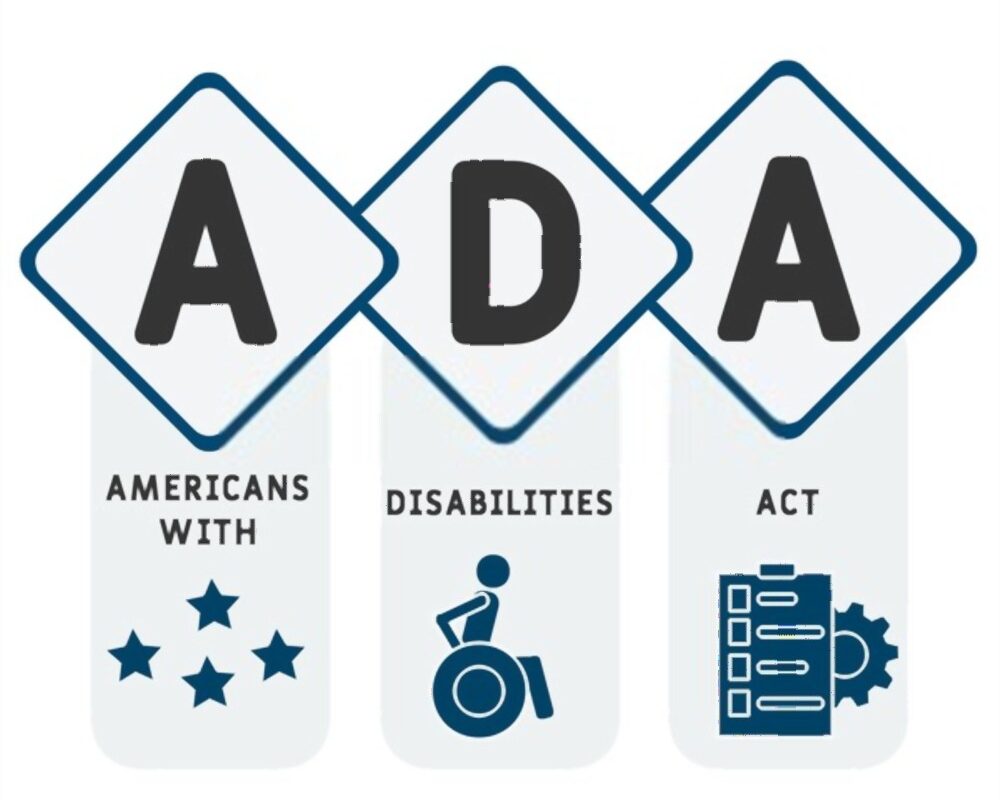
ADA compliance has grown more crucial with each passing year. So much so that it has become necessary for many online web pages to be ADA-compliant. As a result, using a website ADA compliance checker has become more common in the last few decades. But should you scan your website using an ADA compliance checker?

We are here to answer that question. And help you find out whether using an ADA compliance checklist is a good fit for you and your website.

Why You Should Use An ADA Compliance Checker

With the changing rules and regulations for what ADA compliance means, ensuring your site is ADA compliant is becoming more crucial. But why should you use an ADA compliance checker?

1.    It Gives You A Clear Idea About Your ADA Compliance Level

One of the major selling points of using an ADA compliance checker is that it can give you a clear idea about where your website stands. And the changes you need to make to your website?

It can be challenging to keep up with the constantly changing rules and regulations that make up the standards of ADA compliance. Thus, by using an ADA compliance checker, you can save yourself some time and effort. And quickly find out issues and areas that require adjustment on your website.

2.     Avoid Penalties

At present, all up-to-date pages require, at the very least, a compliance grade of A. The highest grade is AAA. As a result, many very prominent brands and companies have fallen into lawsuits due to a lack of ADA compliance.

Thus, we can see the importance of maintaining a compliant site. So, an ADA compliance checker may come in handy if you want to avoid these consequences.

3.    Attracting A Larger Audience

A website that lacks proper ADA compliance is missing a large audience of users. Resulting in millions upon millions of lost customers or sales due to the inability to use the website properly. It is due to the website not being designed for individuals with disabilities. Thus, it makes it quite difficult for them to use.

The checker can allow you to quite easily see the issues with your current website. Including accessibility issues and how you can make your website more accessible. This allows you to gain access to a new audience and group of potential customers.

4.    Helps With Search Engine Optimization

Not only does the checker allow you to appeal to a much larger audience, but it can even improve the reach of your website. Screen readers are an accessibility tool used by individuals who are visually impaired. These screen readers act similarly to Search Engine crawlers that scour through pages.

As a result, if your website meets the requirement of ADA compliance, then it is equally likely to improve your page’s SEO. Thus, the checker not only acts as a tool to make your website ADA compliant but also as a checker for Search Engine Optimization. As a result, it increases the reach of your website.

5.    Improve Your Website Reputation

With the help of this checker, you have managed to appeal to a new audience and increase your website’s reach. However, that is not the only reason to use this checker. Adopting a more accessible approach can also help spread your website’s reputation.

By making your website more accessible with the help of a checker, you can garner the faith of your user base; these changes and adjustments to accessibility signal to users that you care about their experience on your site. It results in return users and an increase in word of mouth as you build a reputation for your website as an inclusive and welcoming page.

6.    Improvement Of The User Interface

One of the checker’s leading roles is ensuring that the user interface and experience are smooth and usable. As a result, the checker can help to improve the overall website usability. Thus, by using the checker properly, you can make your website ADA compliant and more usable along the way.

Conclusion

An ADA compliance checker has more uses than just meeting the standard set by the ADA and can help your website grow and reach a larger audience. ADA checklists can give you an idea of what you need to do going forward and what changes your website needs to make.

What Is Section 508 Compliance & Why Is It Important?

What Is Section 508 Compliance & Why Is It Important?

Section 508 is a law that requires all federal agencies and non-profit organizations that receive financial assistance from the federal government to make their electrical, communication, and information technologies inclusive and accessible to all people, including those with disabilities.

It is important because it prevents discrimination against disabled people within a government institution. Making IT-related industries accessible to disabled persons can substantially improve their quality of life because they are crucial to people at all stages of life.

What Is Section 508?

Section 508 is actually a vital law that requires all federal agencies and organizations that receive government funding to provide accessibility for people with disabilities. We’ll be exploring what this means in practice and why it’s so important to have web accessibility.

The term “Section 508” is actually a former section of the Rehabilitation Act of 1973, which was amended by the Rehabilitation Act Amendments of 1983. This was a wide-ranging law that introduced many of the electronic accessibility standards we know and love today.

Section 508 guidelines specifically state that any federal agency or organization that receives federal financial assistance must comply with handicapped accessibility standards. It’s important to note that the ADA is a separate law and does not require any federal or non-government organization to comply with the ADA.

It can be interpreted as mandating equal access, but this is not it at all. The technology standards are set by the Access Board under Section 508 to ensure that people with disabilities are given the same opportunities as everyone else. Note that there are differences between Section 508 and ADA compliance.

Section 508 compels any information and communications technology-related agencies that receive federal aid to take the necessary steps to prevent discrimination based on the disabilities of an individual. ADA, on the other hand, is similar to this section but in a broader sense. It compels all agencies, whether government or private, to prevent discrimination in any public accommodation. A separate ruling has now included online assets.

How Does The Government Enforce Section 508?

Section 508’s enforceable portion is largely focused on procurement and is administered through the Federal Acquisition Regulations. Beginning in January 2001, Section 508 was included in the Federal Acquisition Regulations.

This implies that when the government purchases information and communication technology, it must choose the product that best fits accessibility criteria. For example, when a federal agency is buying a vending machine and has narrowed it down to five vending machines that match all the criteria. Section 508 dictates which one the federal agency must buy, the one that’s most accessible to disabled people.

Impacts Of Section 508?

The main impact of section 508 is that it made the government focus on accessibility programs and prioritize individuals with limitations and disabilities. Section 508 reshaped the government’s purchasing habits in its sector.

The private sector also took notes from this change. Another great impact of section 508 is that it forced federal agencies to establish accessibility programs. Government agencies now emphasize a lot more on accessibility and disability programs.

Why Is Section 508 Important?

Section 508 is important because it sets equal rights for people of all sorts in society. No one gets discriminated against because of their disabilities. All the government bodies present equal facilities to the taxpayers.

You cannot expect the private sector to introduce equal accessibility to all people if the federal bodies don’t do it first. Section 508 compels all government agencies and private agencies that receive federal aid to apply equal accessibility to everything related to information and communication technology.

This isn’t limited to just a webpage, but everything it is related to, such as software, mobile applications, documents, and even hardware interfaces like TVs, printers, scanners, etc.

Conclusion

For disabled people, Section 508 is important as it enables them to easily access information and technology-related resources. It compels federal agencies to abide by accessibility programs and ensures equal rights for all people. It is not limited to something trivial; it applies to everything related, from hardware like TVs, fridges, printers to websites, web content, eCommerce sites and everything in between.

ADA For Web is dedicated to ensure that website and client interactions follow accessibility guidelines. Contact us now to get a website accessibility audit.

What Are Accessibility Lawsuits? Things You Need To Know

What Are Accessibility Lawsuits? Things You Need To Know

The web and the internet are essential in our daily lives nowadays. Everyone needs to use the web in some capacity. And that also includes people with disabilities. That’s why websites are required to be accessible under the ADA law.

There was a record number of ADA accessibility lawsuits last year. So, here is all you need to know about the ADA-compliant website law and more. If you have a website, there’s never been a better time to check how accessible your website is.

What Are Accessibility Lawsuits?

ADA web accessibility law states that places of accommodation should have equal access to their services, goods, and facilities. And this includes people with disabilities as well. Websites also fall under this rule; they are also considered “places of accommodation’ according to the law.

So, an accessible lawsuit can be filed by a private plaintiff if they feel like a website has not been designed or coded to be accessible. However, in some cases, the justice department can also file lawsuits.

If there is a “general public importance”, which means that if an act of violation affects a lot of people, the DOJ can start investigating themselves.

Recently we have seen a hike in ADA complaint lawsuits. Especially during the Biden administration. The DOJ has increased its web accessibility enforcement activities.

Is The ADA Law Being Exploited?

Business owners who also happen to have a website might think about whether it’s all a scam or not. And are these plaintiffs abusing the law to gain some kind of monetary benefit? Well, while the ADA doesn’t allow any kind of monetary gain for plaintiffs, state laws might vary.

For example, in California, the Unruh Civil Rights Act gives out $4,000 in monetary damages for each offense. Sometimes, the ADA can allow the plaintiff to cover the cost of legal services from the business.

No matter how you look at it, fighting a lawsuit can be very expensive. And this is regardless of whether you choose to settle or litigate it. Protracted litigation can go into the six figures—around $100,000. Settling can be around $14,000.

Of course, these are solid numbers. These are just from past cases. The cost will most definitely vary from case to case.

How To Ensure That Your Website Is ADA Compliant?

This is where things get a bit tricky. ADA does not provide any kind of guidelines for creating an accessible website. This makes things a bit challenging.

But the WCAG 2.1 guidelines help a lot. It stands for Web Content Accessibility Guidelines, and it is accepted as a reasonable standard when creating an accessible website. The bottom line is that if your website conforms to the WCAG 2.1 guidelines, your website will be accessible to most users.

However, private plaintiffs can file a lawsuit for any reason. But according to historical data, most lawsuits will cite the failure to meet WCAG guidelines as the primary issue. An expert web accessibility consulting service can help you with your ADA compliance.

You need to ensure that you meet the criteria and guidelines of WCAG 2.1. And accessible websites for law firms are even more important.

Web Accessibility Is Worth It

Although web accessibility lawsuits can be a hassle, at the end of the day, an accessible web is better, whether you’re an eCommerce site or any kind of site. You might argue that web accessibility for law firms is even more important.

The point of the matter is that the internet is so ubiquitous nowys that companies and brands should provide an accessible experience. Because in the long run, this will contribute to the goodwill of the company.

Having an inaccessible website can create a negative image of the brand. At least for disabled customers. And the brand can lose a large chunk of the potential customer base in that sense. Which can result in more revenue loss in the long run compared to a lawsuit.

Wrapping Up

ADA compliant website laws help disabled people enjoy an inclusive web experience. And it’s always in a company’s best interest to give all of its potential customers a smooth experience.

Our experts at ADA for Web can help you in achieving that. So, don’t be shy to get in touch with us for a website accessibility audit.


WCAG 3.0: What You Need To Know About The Future of Accessibility Standards

WCAG 3.0: What You Need To Know About The Future of Accessibility Standards

The laws and guidelines regarding accessibility standards are changing constantly. Web content accessibility guidelines have always been the standard. But what can you expect from it as we move forward?

In this article, we will give you an idea of what the new web accessibility terms will look like going forward. And what benefits of web accessibility these new guidelines will provide in the long run.

The Future Of Accessibility And WCAG 3.0

WCAG 3.0 is not too far into the future. And will end up entirely changing the landscape of accessibility standards going forward. But, what do these changes mean?

What You Need To Know

WCAG will bring about a whole new grading system for website accessibility. The new system will replace the old A/AA/AAA grading system. Furthermore, the new grading system will be easier to understand. Using bronze/silver/gold to replace the older format.

This new grading system aims to be much simpler and easier to understand for both experienced and inexperienced users. Additionally, these newer guidelines will be more thorough. As a result, WCAG 3.0 will aim to solve issues for a more comprehensive array of people with disabilities. Instead of concentrating on the more prominent forms of disabilities.

The future of WCAG hopes to be more flexible, using an outcome-based model. Older versions of the guideline used a pass-fail model. Thus, you cannot claim that the website follows the AAA guidelines if it fails any requirements for AAA guidelines.

The new model is outcome-based, meaning that it will rate the outcomes for each standard of WCAG 3.0. Furthermore, it will score these outcomes on a 0-4 scale. Thus, if the site faces a significant error in meeting a specific standard, that outcome will get a 0.

Why Do We Need WCAG 3.0

Like anything else, a new version always has changes and improvements over its predecessor. That is why a new version exists, to improve on the current version. WCAG 3.0 exists for that exact reason to bring much-needed change and improvement to the current version.

Advancements In Technology

One of the significant reasons for an upgrade to the existing guidelines is the advancement of technology. Technology is becoming more and more advanced with each passing year. And more so now, WCAG 2.1, which arrived in 2018, is starting to become outdated due to the advancement of technology.

As a result, we need a new and improved guideline compatible with the current technology. And WCAG 3.0 is the answer.

This guideline version will focus more on IoT technologies like wearable gadgets and mobile devices. Furthermore, they are also looking into working with augmented and virtual reality.

Due to this focus on a vast array of web accessibility, WCAG 3.0 is named in such a fashion, compared to prior versions being called 2.0, as it is more along the lines of being a W3C accessibility guideline.

More Inclusion

Initially, WCAG focused on a limited number of disabilities when creating this guideline. As a result, numerous individual disabilities did not match these specific disabilities. Thus, they could enjoy the benefits that others have received through these guidelines.

So, the Accessibilities Guideline Working Group is committed to covering them in the new guideline version. The functional categories of disability below are likely to be added.

  • Sensory and Cognitive Intersections
  • Mental Health
  • Executive
  • Memory
  • Learning
  • Literacy and Language
  • Attention
  • Speech
  • Sensory and Physical Intersections
  • Motor
  • Mobility
  • Sensory Intersections
  • Auditory and Hearing
  • Visual and Vision

Improved Readability

One of the significant issues with the earlier version of WCAG was its readability. Many users found the old guidelines harder to understand. It results in frequent mistakes by users attempting to work on the accessibility standards.

However, mistakes in the new version are far less likely. It is due to the diverse cast of stakeholders working on it together. With their specific knowledge of the technical sphere, they should be able to create simple and easy-to-understand guidelines for users to follow.

Conclusion

Going into the future of web accessibility terms may seem daunting. But this new version of WCAG is sure to benefit users all around the world. And make using the internet more accessible to all. We here at ADA For Web help businesses achieve all sorts of accessibility standards including WCAG.

So, if you are in need of such services, get in touch with us right away.

Qualities To Look For In An ADA Consultant

Qualities To Look For In An ADA Consultant

With each passing day, there is a growing ADA compliance for websites. As a result, several consultancy services have appeared in the last decade. Consequently, this has resulted in a rise in demand for ADA website compliance consultants and ADA consulting services. As a result, a number of consulting services have emerged over the past decade.

However, this presents its own problem. With so many ADA companies, which should you pick? In this article, we’ll give you a list of the best qualities to look for in an ADA consultant.

What To Look For In Your ADA Consultant?

Whether you are looking for an ADA consultant for your own website or a company website, you should know what to look for. And the signature qualities to identify a qualified ADA consultant?

1.    Substantial Knowledge Regarding WCAG

The web content accessibility guidelines are the cornerstone to ensuring your website meets the standard of the ADA. It has been regarded as the standard by the Department of Justice. As a result, it sees usage by both consultants and web professionals alike.

There is more to accessibility than just using alt text. It goes beyond using media, adjusting text size, color, etc. So, if your consultant lacks substantial knowledge of WCAG, you should keep looking.

One of the most common mistakes made by these types of consultants is overlooking documentation, as accessibility does not stop at just your website. It goes beyond that to documents that they can find on your websites. These include price sheets, brochures, and other documents that users can download from your site.

All of which need to be accessible to those with disabilities. Thus, having a consultant who knows the WCAG in detail can save you from making such mistakes.

2.    Qualification

Just like any other job, qualifications matter, especially for ADA consultants. Looking into their qualifications is crucial as one can become an ADA consultant through various means. Thus, before hiring any consultant, ensure that their expertise and capabilities meet your needs.

A great way to learn about a consultant’s abilities is by checking if they belong to any professional organization. Belonging to one, such as the International Association of Accessibility Professionals, guarantees that they are up to date with changes in regulations.

So, hire an individual with the proper credentials and professional association to vouch for it to ensure the future of your website.

3.    The Consultants Process

Whichever consultant you choose to hire, you have to be able to understand their process. As an employer, understanding the consultant process gives you a benchmark to measure them up against. Furthermore, their approach can help you figure out your current website’s shortcomings and how you can improve upon them.

So, sit down with them and discuss how they can help you. And the kind of process they follow. It can help you determine if they are a good fit for you.

4.    Testimonial And Case Studies

When hiring a consultant or a team, you need to see what kind of work they have done before this. A good reputation is crucial for a consultant. The best way to do this is through testimonials. These testimonials give you an idea of what you can expect from them when you go into business with them.

Case studies also play a crucial role in this. They can show you how they can help you and your website through case studies. And how they solved similar issues that prior clients may have had.

5.    Understanding Your Unique Needs

Each company, individual, or organization is unique. Thus, they require special attention. The same is true when making a website more accessible. It needs to meet both your specific users’ needs.

Thus, a qualified ADA consultant must have an understanding of your needs. And be able to make your website ADA compliant and meet your needs. So, when looking for a consultant, ensure that he has at least some prior experience in your industry.

Conclusion

Finding the right ADA consulting services can prove to be a challenge. Considering the numerous ADA website compliance consultants currently available, you need to know what to look for. Hopefully, the qualities we mentioned will guide you through the process. However, if you have any other questions about ADA or inclusive web design, feel free to contact us.

0