Why Law Firms Should Make Web Accessibility a Priority?

Why Law Firms Should Make Web Accessibility a Priority?

Law firms are required to make their websites accessible to people with disabilities under the Americans with Disabilities Act (ADA).

However, many law firms don’t meet the ADA’s guidelines for web accessibility, and as a result, people with disabilities have difficulty accessing the information on these websites.

Making your website accessible is not only required by the ADA, but it’s also the right thing to do.

In this blog post, we’ll discuss why law firms should make web accessibility a priority and how they can go about making their website more accessible.

Why Law Firms Should Make Web Accessibility a Priority?

Making your website accessible is not only the right thing to do, but it can also be good for business. Here are a few reasons why law firms should make web accessibility a priority:

  1. You want your message to reach as many people as possible.

It is more important than ever to reach the broadest possible audience with your message in today’s society. By making your website accessible, you will reach more people who might not have been able to access your content otherwise. This includes people with disabilities, older adults, and rural areas who may have slower internet connections.

  1. It’s the law.

Did you know that under the Americans with Disabilities Act (ADA), it is illegal to discriminate based on disability? [cite company policy]

  1. Your site will rank better on Google and other search engines.

Having an accessible website that uses headings, lists, and images will ensure that Google and other search engines can better understand your content. That means you can get higher rankings in results and more organic traffic from people searching for services like yours!

  1. It’s not as expensive as you think.

Making your website accessible does not have to be expensive or complicated; there are a number of free tools out there that can help:

  • The Paciello Group offers free and low-cost options to help make your site more accessible.
  • WebAIM has a great page on WordPress plugins that can help you improve accessibility, including the Ultimate Tag Warrior plugin, which highlights all of the headings on your site and is free and easy to use!
  1. It will increase client loyalty and leads.

If you make your site accessible, people will be more likely to share your content with their friends and family who might not otherwise have access – and that means more leads and clients for you!

  1. You can help educate your peers in the legal industry by highlighting your efforts on social media and at conferences.

As a lawyer, it is important to understand how those issues affect our community; making your website more accessible helps highlight those areas as you learn about them. Through professional development opportunities like webinars hosted by The Paciello Group or books like Web Accessibility for Lawyers.

By following these five steps, you can improve accessibility for both current and future visitors of your website:

  1. Use correct HTML coding. This includes using the correct DOCTYPE and providing alternative text for images, video, and audio files so that search engines can better understand your content. [Link to Google search on how to add alt-text]
  2. Make sure your website is compatible with screen readers such as JAWS and NVDA.
  3. Create easy navigation systems for visitors who cannot use a mouse, such as keyboard shortcuts or skip links accessible by using the tab key alone. [Link to article about how to add an accessible skip link]
  4. Test your website on multiple browsers and mobile devices before launching it live!
  5. Continually improve and update your site to make it accessible to all visitors, especially as new or updated technologies come out.

Why is it essential that websites are accessible?

Websites must be accessible because everyone deserves to have access to information. Websites should be designed in a way that allows everyone to use them, regardless of their abilities or disabilities.

Making your website accessible is not only the right thing to do, but it can also benefit your business in many ways!

Does the law require me to make my website accessible?

Yes, suppose you run or manage a website or online service and want your site to comply with the U.S. and international law. In that case, you’ll need to be mindful of web accessibility considerations for all users – not just those with disabilities.

The Web Content Accessibility Guidelines (WCAG) 2.0 are the internationally recognized standards for making websites accessible. Most influential organizations voluntarily adopt them because they protect civil rights and promote digital inclusion worldwide.”

Do law firm websites have to be ADA-compliant?

Yes! Section 508 of the Rehabilitation Act stipulates that all websites operated by federal agencies be accessible and compliant with the ADA.

This includes law firm websites because, under ADA Title 1, all state, local, or municipal government departments must provide goods or services to citizens who have disabilities in the most integrated setting appropriate.

Law firms can quickly certify their website as compliant through a service called WAVE (Web Accessibility Evaluation Tool), which runs a series of tests to identify and automatically fix accessibility issues on your site.

What are the benefits of accessible web design?

Web accessibility is the design of websites and web content accessible to all, including people with disabilities. This includes making sure that all content is accessible through keyboard navigation, screen readers, and other assistive technologies.

By making your website accessible, you are not only making it possible for people with disabilities to use it, but you are also increasing the overall usability of your site for everyone.

Some of the benefits of accessible web design include:

  1. Increased audience reach – By making your website accessible, you are opening it up to a wider audience than ever before. This includes people with disabilities, older adults, and those using assistive technologies to browse the web.
  2. Improved user experience – It is no secret that users are willing to leave a website if it takes too long to load, is complicated to navigate, or doesn’t have all the features they are looking for. Law firms should note that making their sites accessible will improve the overall user experience, increase interaction with visitors, and enhance SEO.
  3. Improved search engine rankings – Google has stated time and time again how important it is for websites to be accessible. By ensuring your site is accessible, you are opening up opportunities for higher search rankings, as well as an enhanced user experience. These factors contribute to building trust with your clients, which improves brand image!
  4. Increased visitor loyalty – If someone goes through the effort of finding your website and navigating it, they are more likely to come back again in the future. By taking the necessary steps to make your site accessible, you are increasing visitor loyalty and creating long-term business relationships possible online!
  5. It’s good for business – At the end of the day, it is important to remember that making your website accessible is simply good for business. Whether it’s your law firm or some other type of organization, providing information in an easy-to-understand format will promote trust among potential customers, which can lead to more sales. This ultimately leads to an improved company image and makes you look like a competent professional with all things considered!

Conclusion:

It is essential for law firms to make web accessibility a priority. I hope this article has given you some good ideas about how you can improve your firm’s ability to serve those who may not otherwise visit your site due to limitations imposed by disability.

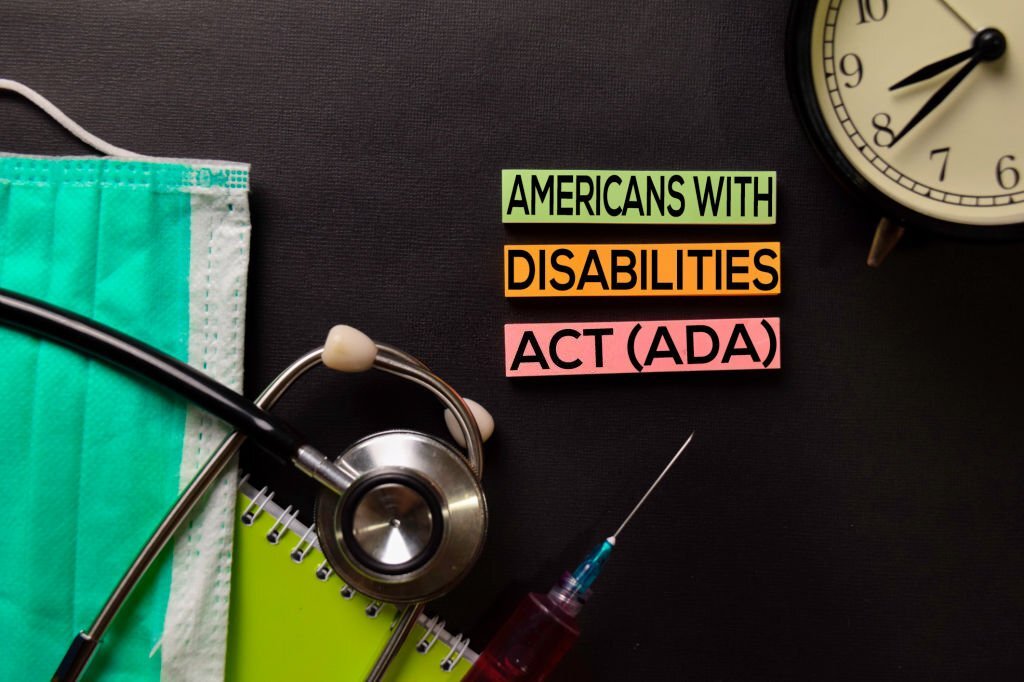
What are the ADA compliance requirements for law firm websites?

What are the ADA compliance requirements for law firm websites?

As a lawyer, you know that it’s important to stay in compliance with the ADA. But did you know that your website must also be compliant?

This blog post will go over the specific requirements for making your website ADA compliant.

We’ll also provide tips for ensuring that your website is accessible to all potential clients. Stay in compliance and make sure your website is up to par – read on for more information!

What are the ADA compliance requirements for law firm websites?

The United States has several laws that provide civil rights to people with disabilities. These include the Americans with Disabilities Act (ADA), which was signed into law in 1990, and the Americans with Disabilities Amendments Act (ADAAA), passed in 2008.

These acts prohibit discrimination against people based on their disabilities and require institutions to make reasonable accommodations for these individuals.

One of these elements is making your website accessible to all potential clients – regardless of disability or impairment.

By law, any website that collects information from or about individuals must be compliant with federal legislation surrounding this issue. This means that your website is subject to ADA compliance requirements.

What exactly does ADA compliance entail? 

According to Title III of the Americans with Disabilities Act:

“No individual shall be discriminated against on the basis of disability in the full and equal enjoyment of goods, services, facilities, privileges, advantages, or accommodations of any place of public accommodation by any person who owns, leases (or leases to), or operates a place of public accommodation.”

This law applies to brick-and-mortar businesses and virtual places of business – including internet retailers and service providers.

Essentially, if your firm has a presence online, you are obligated to make your web content accessible to people. This includes making changes to your website to improve the site’s usability and accessibility for those with disabilities.

What sorts of legal and ethical considerations must be considered when it comes to ADA compliance?

There are a variety of factors that need to be addressed, including:

  • Designing your website so that it conforms to established web design guidelines – such as ensuring that the site is compatible with screen readers (for those individuals who cannot see images), larger fonts can resize text size, content has appropriate tags (such as headings, lists, etc.) and there are no horizontal scrolling issues;
  • Ensuring that your website is compatible with commonly used assistive devices and technologies (such as screen magnifiers);
  • Employing clear and consistent navigation;
  • Ensuring that content is available in alternate formats (such as website text or PDFs) upon request and that these files are clearly labelled.

How can law firms make sure their websites are ADA compliant? 

Work with web designers who have experience creating accessible sites – they’ll be able to help you assess your site’s current level of compliance with the ADA and any potential areas for improvement. Ensure that all pages on your website are searchable using popular web browsers;

Make sure your content is written in a clear, concise manner with minimal jargon;

Ensure that incoming links open in new windows, so visitors don’t lose their place on the page when they follow a link from another carrier and that the new link targets a different page rather than a specific section on your page;

Include meta-descriptions for all pages on your website to ensure search engines can read text from images.

Why should law firms make their websites ADA compliant? 

The law is clear about making changes to your website for it to be accessible – but there are also ethical reasons you should want to do this, such as building trust with potential clients, reinforcing your position as an expert who understands legal issues faced by people with disabilities, improving access to information and ensuring you remain competitive.

Even if someone isn’t explicitly affected by disability or impairment themselves, they may know someone who is, so it’s important not to ignore this population.

What can law firms do to ensure their website content is accessible?

Just because the ADA only applies specifically to physical locations does not mean that this legislation has no bearing on websites. It’s a must for all organizations with a presence online.

Most people nowadays use the internet as a source of information and other resources, so if your website isn’t accessible, you’re missing out on business from a large portion of potential customers. Many state laws even require individual companies to have an accessible site.

This means that both ethics and legality are good reasons for making sure your law firm website complies with the Americans with Disabilities Act requirements.

Why Should Attorneys Want to Make Their Websites Accessible to Persons With Disabilities?

One of the reasons attorneys should want to make their websites accessible to persons with disabilities is because it’s the right thing to do, and it’s also the law in many cases.

But making your website accessible doesn’t just mean checking a few boxes and calling it good – there are many things you need to consider to ensure that your website is genuinely accessible to everyone who needs it.

Do law firms have to comply with CCPA?

There is a lot of confusion about the California Consumer Privacy Act (CCPA) and whether or not law firms have to comply with it. The short answer is: yes, law firms do have to comply with CCPA if they are doing business in California.

CCPA applies to any company that does business in California and has collected personal information from at least one California resident in the past 12 months. This includes law firms, as well as any other type of business.

So what does this mean for law firms? It means that you need to take steps to protect your client’s personal information and ensure that you are compliant with CCPA. This includes drafting a privacy policy that meets the requirements of CCPA.

Note that the California Attorney General is now enforcing this law, which means you can be exposed to lawsuits or penalties for not complying with CCPA.

The good news is that resources are available to help you comply with CCPA. For example, there are tools and services to create a privacy policy.

What are the levels of ADA compliance?

There is no one-size-fits-all answer to this question, as the ADA compliance requirements for law firm websites will vary depending on the specific needs of each business. However, there are four general levels of ADA compliance:

  1. Awareness: Ensuring that your website is accessible to people with disabilities is the first step in achieving ADA compliance. This can be done by ensuring that all images have alternative text descriptions, using headings and labels to create a clear structure for your content, and providing transcripts or captions for any multimedia content.
  2. Accessibility: making sure that your website can be accessed and used by people with disabilities is the next step. This includes making sure that all content is accessible through a keyboard, that users can adjust the text and background colors to meet their preferences, and that they can download any transcripts or multimedia content.
  3. Digital access: ensuring that your website is accessible across multiple forms of digital media is another critical step towards achieving ADA compliance. This includes ensuring that visually impaired people have access to audio features like transcripts or captioned multimedia content, that all users have access to touchscreen devices without barriers, and that the website is usable by both left-and right-handed individuals.
  4. Compatibility: ensuring that your website remains compatible with future technologies will help ensure ADA compliance now and in the future. This includes updating browsers or screen readers as their manufacturers update them, using HTML code to validate your webpages, and keeping your website up to date with the latest accessibility features.

Conclusion:

When it comes to website accessibility, law firms are responsible for ensuring that their websites are compliant with the ADA and all applicable laws.

This includes making sure that all content is accessible to those with disabilities and ensuring that all features and functionality are available to everyone.

There are many ways to make your website more accessible, and it’s essential to take the time to avoid any legal issues down the road. While here, I hope you found this article helpful and informative about “ADA Compliance Requirements for Law Firm Websites.”

ADA Website Remediation Guide

ADA Website Remediation Guide

If your website is not in compliance with the ADA, you could be looking at a potential lawsuit. Fortunately, you can take some simple steps to bring your website into compliance.

This guide will walk you through the most important things to consider when remedying your website.

We’ll also provide some tips for making sure your website is accessible to everyone. Let’s get started!

Making Websites Accessible Is the Law

Your website must follow ADA guidelines to provide equal access and opportunities for individuals with disabilities.

The Department of Justice (DOJ) enforces the ADA through investigations and lawsuits. If DOJ finds a violation, they may sue you to obtain court orders and monetary damages to stop the discrimination.

An accessible website reduces your risk of being sued by the DOJ or an individual with a disability. However, even if you are not at risk of legal action, it is still the law to make your website accessible.

We provide specific protections for existing websites built before April 21, 2010. Newer sites must comply with current standards (i.e., Section 508).

Understand The ADA Website Requirements 

The ADA website requirements are split into four categories:

  • High Priority
  • Medium Priority
  • Low Priority
  • Extra Credit

Each of these categories is explained in detail below. Let’s get started!

High-Priority Requirements:

Your website must be compatible with screen reading technology.

Ensure the content is accessible to screen readers by using text instead of images for headers, links, and buttons. Use descriptive link text that includes the function of the linked page, not just the title of the page or subpage.

If you include graphics on your web page, use ALT text to provide an accessible description. The ATAG 2.0 – Section 508 Guide includes further recommendations for ensuring your website is compatible with screen readers.

If you are using Flash or other non-text elements on your site, ensure that they include alternative information presented in a text format.

Your website must be compatible with speech recognition technology.

Ensure your site is compatible with voice recognition software by limiting background noise and not using scripting, Flash, or other elements that may cause the screen reader to misinterpret data.

By making sure your website is accessible to individuals who use screen readers and voice recognition software, you can provide equal access and opportunities for individuals with disabilities.

Medium-Priority Requirements: 

Your website must be compatible with text magnification technology.

Users who have low vision may require enlarged fonts or larger images. By having these options available, everyone will have the ability to view your content.

Make sure to use scalable vector graphics (SVG) instead of bitmap graphics (PNG) to maintain the image quality even when it is enlarged. For further recommendations, refer to the W3C Mobile Accessibility Guidelines.

Your website must be compatible with color differentiation technology.

People who are color blind or have low vision may not distinguish colors well. Ensure that content is also available in black and white or grayscale to ensure everyone has access.

Low-Priority Requirements:

Your website must meet general requirements for text formatting and placement.

The text must be left-aligned, meaning that the reader starts from the same point on each line or paragraph. Headings, links, and buttons should be underlined, bolded, or both to show the text’s importance.

Wherever possible, use headings (H1-H6) to organize your content and make it more accessible. Do not rely only on color or font size to convey meaning because some users will not distinguish these changes.

Your website must provide captions for audio and video content.

Captions provide what is said in multimedia format (i.e., speech or background music). Refer to the FCC’s Online Captioning Best Practices Guidelines for further information on giving captions.

Extra-Credit Requirements:

Provide transcripts for video and audio content.

Transcripts are text created from the audio file. The text should be available in a separate document or included with the multimedia content so users can read along if they cannot hear the video.

Provide alternative representations of color-dependent information.

Some individuals may not distinguish colors well, especially if they have low vision. Make sure that all information is available in a format other than color.

For instance, a background contrasts with associated text or uses shapes to represent information instead of colors.

Your website must be compatible with screen magnification technology.

Use large fonts and high-contrast color models to increase the font size of their browser if necessary. Your website should be compatible with the text enlargement function on most modern browsers.

Should I outsource ADA web accessibility remediation?

There is no one-size-fits-all answer to this question, as the decision of whether to outsource ADA web accessibility remediation will depend on a variety of factors, including a budget, timeline, resources, and expertise.

However, many organizations find that outsourcing this work can be a more efficient and cost-effective way to meet their ADA compliance obligations.

The first thing to consider is who will do the website cleanup: your development team or an external ADA website maintenance firm? If you already have a team in place, we strongly suggest utilizing it.

If your team is overwhelmed, doesn’t exist, or you’d instead work with a group of WCAG remediation professionals, we can step in and provide the assistance you require.

ADA Website Remediation:

The first step is to categorize the audit results by task type and importance or urgency. In our documentation, we indicate the level of each item and then give a priority ranking so that project management may use it. Issues are classified into three categories: design, content, and development.

Design Issue: These issues include colour contrast, movement, and audio.

Content Issue: These issues include information missing from the screen-reader text file or other features that do not rely on the design.

Development Issue: These issues are typically coding errors in which a developer may have implemented a solution to a problem in a way that creates new problems.

For each of these items, we guide how to resolve the issue and include any relevant references to the WCAG 2.0 at Level AA success criteria or other sources for more information.

PDF Remediation: 

When it comes to PDFs, you need a company that can handle the job for an affordable price. There are specialists out there who will remediate your entire website in bulk at discounted rates if needed; we recommend using one of these services instead!

Choosing a Sect 508 / ADA Website Remediation Consultant:

To start, ask for references from an attorney specializing in web accessibility or an experienced website designer.

You’re looking for a person or team who can get both the code and how people with disabilities use assistive technologies to navigate websites – which isn’t your average developer!

Conclusion:

The ADA Website Remediation Guide is a comprehensive set of recommendations and best practices for making websites accessible to individuals with disabilities.

The guide offers an overview of the requirements of the ADA, explains how to make websites accessible, and provides case studies of organizations that have successfully remediated their websites.

If you’re looking for help remediating your website or want more information on the ADA, this guide is a great place to start.

Global Awareness Day

Global Awareness Day

Global Awareness Day Videos

Celebrate the 2021 Global Accessibility Awareness Day with 9 sessions. Take a look below!

Content is The Currency of Human Connection with Optimizely (Episerver)

Accessibility is Here to Stay: A Panel with Siteimprove

How to Make Accessible Videos in 5 Key Steps with 3Play

The Sustainable Future of Document Accessibility with AbleDocs

Go Beyond Compliance; an Accessibility Case Study with ImageX

How to Improve Brand Advocacy with Digital Accessibility with Sid Lee

Inclusive Healthcare; Accessible Website Best Practices with Reason One

Common Accessibility Mistakes in Online Banking with Americaneagle.com

The City Hall for All with Granicus

Top Reasons For Your Website To Be ADA Compliant

Top Reasons For Your Website To Be ADA Compliant

There are many design fashions to be aware of when building your brand’s website. A common question asked by most people is about its appearance that how it looks, or how could it convert visitors into customers. But no one asks, is your website ADA compliant? If not, what are the reason to have it? 

First thing first, ADA is the Americans with Disability Act which was developed in 1990 to ensure that all people must be given equal opportunities including the disabled ones. The disabilities may be visual impairment, hearing disorder, or any physical capacities. 

The rules are basically made for all the businesses that serve the public including building and website both. Thus, commercial buildings have almost all the facilities for handicapped people, what about your brand website? Is it ADA compliant? For this, the Official Standards of Website Accessibility may help you in checking your website accessibilities. In addition, here are a few benefits for having an ADA compliant website:

Expanding Your Target Audience 

The figure says, there are 50 million people with disabilities in the U.S that implies there are 19% of this country has a disability. Thus, if your website is not ADA compliant then you are somewhere losing some potential users. The consequences are clear, they will opt for your competitor’s website for easy navigation because your website is not designed for them to deliver your services. 

Improve Your SEO Efforts 

The key element of Web content Accessibility Guidelines is the accessibility to screen readers, and these readers crawl your website that meets the WCAG, it will likely appeal to users, search engines, and screen readers. That eventually improves your SEO results. For better results, meta-tagging, alternative image text, video transcripts work best. 

Hike Your Reputation

Being ADA compliant, your website is targeting more customers by which you are not only gaining more traffic on your website, side by side, you are gaining their trust as well as they also know how valuable they are to your business. This is one of a way to increase visitors as a way of recommendation. After visiting a couple of websites, a happy user surely will share their experience with their connections.

Overall Better Website Usability 

A website with better navigation, good operable, designed by following the WCAG will offer easy to comprehend that will allow everyone to find what they are looking for. Thus, it is good for the disabled and non-disabled ones. 

Win Over Penalties 

Having an ADA compliant website, save you from penalties that several businesses like Foot Locker, Brooks Brothers, Kylie Jenner that have been sued for the lack of ADA compliant websites.

For better understanding, below are the points given for a more inclusive site and adopting the WCAG: 

Analyze Your Current Site

ADA compliant website must meet the standards within these four categories: 

  • Perceivable
  • Operable
  • Understandable
  • Robust

Make sure your website meets all the above requirements. Use the ADA guidelines as a starting point to create a blueprint for your own site.

Choose the Right Graphics 

Carefully selection of graphics is an important part of accessible websites. The graphics must not be flashy more than three times per second. Besides, graphics should also have a description or caption with a read-aloud feature for a better understanding of visually impaired.

Alt-Text And Readable Font 

Ensure to provide alt text and readable fonts to all the images in your code. Alt-text allows site readers to describe your image audibly. 

Logical Website Features

Making everything easy to access is the key to a website. For example, the color combination and the color of the text must be easy to read. Also, putting a sign of “X” clearly on the upper corner of the pop-up to show how to close the window. A website must deliver clear information about what the user wants to gain. 

Include Standard HTML Tags

The basic requirement is the code should be readable by an assistive reader. Also, the code must use standard HTML tags. The complex image documents can’t be understood by software that reads text aloud for visually impaired website users. 

Friendly Keyboard And Pause

Not all users are able to interact with a touchscreen or a grip mouse. For instance, the reader must be able to pause content or slow down automatic scrolling/slideshow movements. Plus, eliminating videos that autoplay and have a time limit add more accessibility ease. Also, make sure that all video interactions and pausing should be completed using keyboard functions. 

Remain Up to Date With Compliant Changes

Updating knowledge being in business is good for both point of views – business and consumers. Don’t forget ADA needs are ongoing. So, gain knowledge as much you can and give equal importance to every customer. 

Overall, we have seen there are a lot of benefits of having an ADA compliant website that is good for the sake of easy accessibility as well as better business. In addition, having an ADA compliant website gives you more than what you think, a better accessible website with better results in point of SEO as well as building customer’s trust over you and your business.

For assistance, To Be ADA Compliant is one place that provides the best website audit for the website and design according to the guidelines to save your business hit by penalties. Make your business ADA compliant now and increase the sales along with a hike in visitors on the website with To Be ADA Compliant assistance.

All You Should Know About ADA Compliance

All You Should Know About ADA Compliance

Many of us have heard about ADA Act but only a few have knowledge about it. Is it a threat to business for not following  ADA compliant guidelines? In this article, know all the basics of ADA Compliant website and go through the checklist provided to ensure you care about your all customers. 

Basically, this act was made for the business person to treat all the users including the people who are not efficient to access due to some disabilities. 

The American With Disability (ADA) Act, which was enacted in 1990, is a set of rules ensuring that everyone, including those with disabilities, has reasonable access to all areas of public life. 


It’s not just applicable for the public areas, it’s also about the website owners to provide information that is effectively accessible to all.

What is ADA Compliance?


What Is ADA Compliance

“The Department of Justice (DOJ) revised regulations for title II and III for the Americans with Disabilities Act (ADA) Standards for Accessible Design in Sept 2010. These standards state that all electronic and information technology must be accessible to people with disabilities”. 

The Revised Titles Stated as:  

An overview of both of the revised titles is stated below.

Title II (State and Local Government)

Nondiscrimination on the Basis of Disability in State and Local Government Services  

Title III (Public Accommodations)

Nondiscrimination on the Basis of Disability by Public Accommodations and in Commercial Facilities 

It is also noted that online ADA compliance is not mandatory on anything but government-managed websites. Instead, these rules act as guidelines to ensure that everyone should be able to access, read/view your website.

The ADA Compliance Issues: 

ADA created suggestions for compliance but these suggestions do not make them law. The suggestions are the only guidelines for the website/business owners to follow. For example, disabled parking facilities mandates in the building codes. The same goes for the websites’ though. In addition, it is not explained completely. Thus, due to the lack of guidelines, it’s hard to judge whether a site is ADA compliance or not. 

Is Your Website ADA Compliant?

Now, its time to look at your website to check is it ADA compliant or not. For this, here are a few checklist points you may go through:

Captions and Descriptions For All Videos – Make sure that all the video scenes have audio description for people who are blind or have low vision. Make sure the videos contain text captions so that people who are deaf or hard of hearing able to access it easily.

Alt Text For All Images – Providing text for each image is beneficial for the people who can read by using screen readers or Braille displays. By using Alt texts, people get the information that exactly what the image is for.

Ensure Your Website Meets Color contrast Standards This is useful for those with low vision or color blindness. They can change the website’s color and font to read it without any problem. 

Keyboard Navigation – Assistive technologies like imitate keyboard functionality is made for those who are navigating with their keyboard.

What To Do If You Get Sued 

It is likely that most of the notices received are for the purpose of settlement. If you ever received a letter for a lawsuit or settlement, the first thing not to do is panic. Remain calm because it is not mandatory that you can follow all the guidelines in one website. In a situation like this, you may rather follow the steps below: 

  • Investigate – First of all, investigate yourself about the law firm in question. You can easily get your answers on the internet. Check out the details and seek out the credibility of the firm and who the experts are. Moreover, you must research who all in your industry has received a letter from the same firm. Eventually, you may find a lot of businesses if you know your industry. There could be a chance of a class-suit that would be beneficial for the businesses involved in your industry. To take this action, you must know your industry well.
  • Understand the Claims Made Against You – Be sure that you have a firm that understands all the legal items that are highlighted in the letter. It would be great if you take help from outside. A legal counsel or digital agency is the better option to choose for this.
  • Be Confident To Explain Anything To Plaintiff – Explaining to the plaintiff about the review of the grievance and talked with a lawyer in confidence. It would be good if you explain the guidelines of ADA Compliance. It will be better to let your attorney contact the plaintiff when making statements.
  • Audit Your Website – A complete website accessibility audit is a pragmatic step to prevent getting an ADA lawsuit. It will show you accessibility issues on your website. For example, an audit may uncover that your PDF files can’t be read by assistive technology devices. It could also uncover issues around the alt-tags of images on your website. There are a lot of factors that go into ADA compliance. The audit will see where your site stands now and give you the steps you need to take to get it on track. 

In conclusion, it is all a brief introduction about ADA compliance act, the checklist to inspect and additions to your website, last but not the least, steps to take if in case you are sued for the lawsuit. 

The main concern is to take precautions and be on the safe side by making an audit of your website. You can consult, To Be ADA Compliant which provides web accessibility and consulting services. Schedule your appointment and get the best consultation for your website. 


0